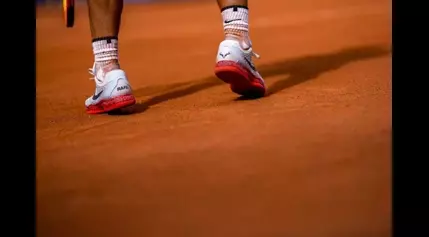
Embracing the Clay: Tennis Players' Sartorial Struggles at the Paris Olympics
As the world's top tennis players converge on the clay courts of Roland Garros for the 2024 Paris Olympics, they face a unique challenge: keeping their pristine white uniforms clean while battling the relentless red dust that coats the surface. This age-old dilemma has plagued the sport's elite for decades, and the upcoming Games promise to be no exception.Battling the Dirt: A Sartorial Odyssey for Olympic Tennis Stars
The Dirty Truth About Clay Courts
The clay courts of the Paris Olympics are a double-edged sword for tennis players. While the slow, gritty surface can create longer, more grueling rallies that test the athletes' endurance, it also presents a unique sartorial challenge. The crushed red bricks that make up the playing surface are essentially dust, and this fine particulate matter has a way of infiltrating every nook and cranny of a player's uniform, from their pristine white shoes to their meticulously maintained socks."Shoes and socks are the worst," laments Elina Svitolina, a bronze medalist for Ukraine at the Tokyo Games. "You have to change a lot. After the clay-court season, everything goes into the (trash)." Svitolina, like many of her peers, travels with an arsenal of spare socks, sometimes as many as 40 pairs, to ensure she can maintain a fresh, clean look throughout the grueling clay-court campaign.
The Allure of the Dirt
For some players, the clay-court struggle has a certain charm. American Tommy Paul, who competed in the third round in Paris, admits that he used to relish the opportunity to get his uniform extra dirty. "I used to think it was cool … I was out there trying to get them extra dirty," he says with a laugh. "As long as you're not wiping out in the middle of a match when you're all sweaty—then it's all over you. That sucks."This playful attitude towards the clay's persistent presence is not uncommon among tennis players, who have long embraced the sport's unique quirks and challenges. However, as the stakes rise at the Olympic level, the desire to maintain a professional appearance can clash with the realities of the clay-court environment.
The Enduring Challenge of Clay
The clay courts of the French Open, which will host the tennis competition at the Paris Olympics, have been a part of the sport's landscape since the 1890s. Legendary players like Chris Evert, who won seven of her 18 Grand Slam titles on the Parisian clay, have grappled with the sartorial challenges posed by the surface."I probably was the type that brought, like, 14 pair of socks," Evert recalls. "It was a mess." Even today, the sight of a tennis player's uniform dotted with flecks of red clay is a common occurrence, a testament to the enduring nature of this unique challenge.
The Clay's Ubiquitous Presence
For players like Marta Kostyuk, a Ukrainian slated to compete in the Olympic quarterfinals, the clay's presence is inescapable. "If you fall once, it's over: The clay is everywhere on you," she says. "I find it on my neck, in my hair, places where I was like, 'Whoa, how did it get there?'"This ubiquitous nature of the clay is a testament to its resilience and the sheer physical demands of competing on the surface. As players dive, slide, and scramble across the court, the red dust clings to every inch of their bodies, creating a visual tapestry that reflects the intensity of the competition.
Embracing the Dirt: A Necessary Compromise
Despite the challenges, many players have come to accept the clay-court experience as an integral part of the sport. As Maria Sakkari, a two-time Grand Slam semifinalist, aptly puts it, "It's a lot easier to play on clay than to get your socks washed, that's for sure."This pragmatic approach to the clay's persistent presence is a testament to the resilience and adaptability of the world's top tennis players. They understand that the dirt is not just a nuisance, but a fundamental aspect of the game they love, one that must be embraced and conquered in order to achieve success on the clay-court stage.As the 2024 Paris Olympics approach, the tennis world's sartorial warriors will once again don their pristine whites and prepare to do battle with the relentless red dust of Roland Garros. It's a challenge that has defined the sport for generations, and one that promises to continue shaping the stories and legends of the Olympic tennis competition.